- Domestic Data Streamers' Newsletter
- Posts
- ✏️ Dearest data fam
✏️ Dearest data fam
We cultivate a most peculiar affection for the cities we inhabit. A dual instinct. On one hand, we grumble.

Domestic Data Streamers
April 01, 2026
Public transport fails us at the worst possible moment. Rents rise with suspicious enthusiasm. The rodents, some of them practically civic participants, carry on with alarming confidence. Green spaces: scarce, contested, occasionally theoretical. Yet there’s also something captivating about the inconvenient beauty of urban life.
We're lucky enough to call Barcelona home - a city of considerable cultural reputation. One might even call it exceptional, though we admit a certain bias in the assessment. Still, even those who have spent their entire lives here would struggle to claim full comprehension. The city does not yield itself so easily. It prefers, like any good mystery, to be approached. Observed. And never quite solved.
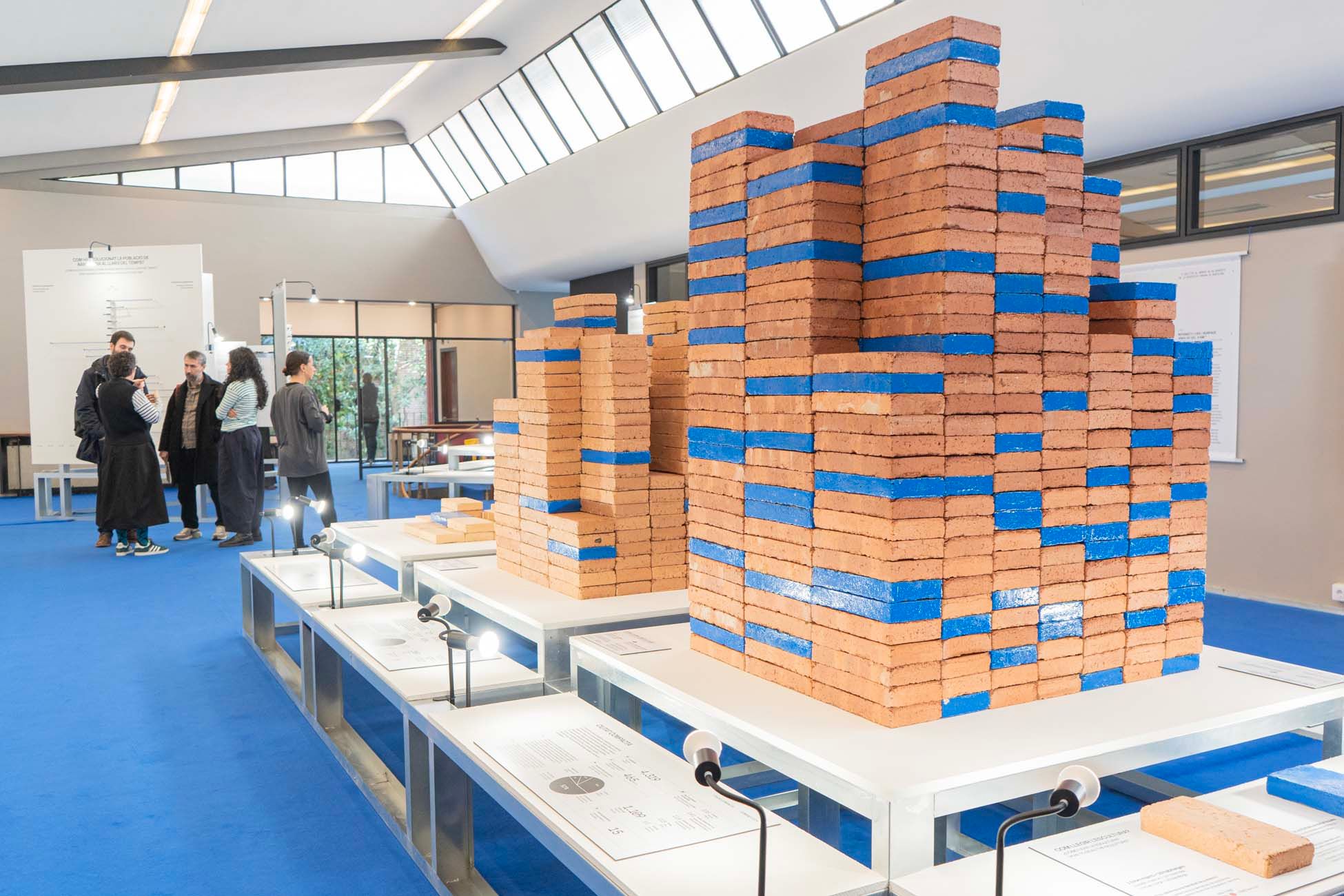
So we tried to address that. With Barcelona being named as the 2026 world capital of Architecture (will the Sagrada be completed this year? in honor of the year of the defunct architect?), we were invited, along with our friends from Hotaru, to design an exhibit on display at the Barcelona House of Architecture. As always, you’re invited, and here’s the info:
🏙️ (ExhibitName) = Barcelona = (Diversitat + Intensitat) x Complexitat - an exhibit that through several interactive, analogue installations, seeks to understand cities - with the example of Barcelona - through the lens of 3 dimensions: Diversity, Intensity and Complexity
📍 LocationOf(Exhibit) = Casa de l'Arquitectura de Barcelona, Carrer del Rosselló, 87, Eixample, 08029 Barcelona
📅 Date = Anytime until December 13th, 2026, Tuesday - Sunday 10-19h
💶 Price = 0 €
If you’re in town, anytime between now and December - we hope to see you there. In the meantime - we wanted to kickstart a little reflection on the cities we inhabit, to start with Barcelona, but through data & visualizations. Can’t come as a shock 🤯
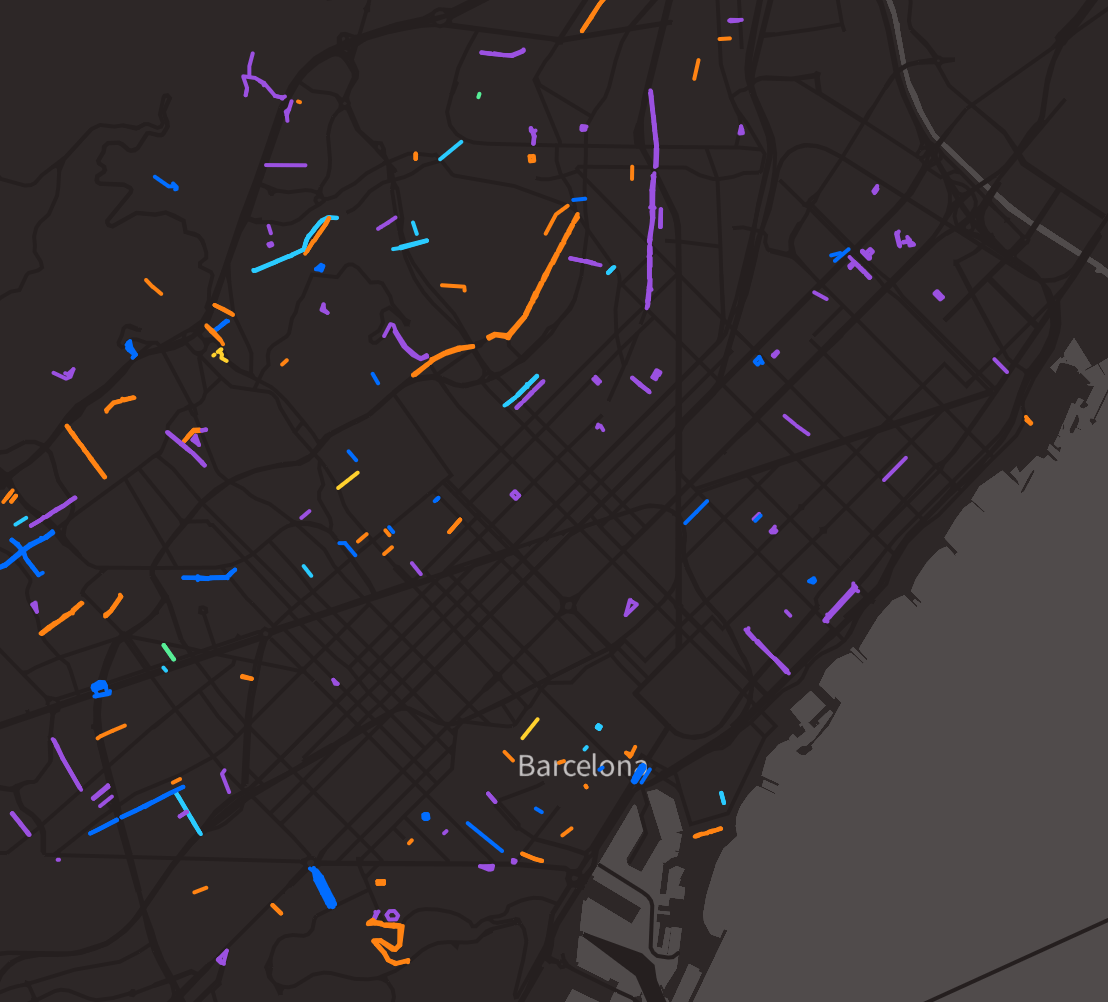
Something interesting happens with the names of places in cities. There’s almost a sense of intimacy that develops between you and the writer who gave his name to your street. A feeling of proximity that comes from seeing everyday the name of that particular historical figure at the entrance of its eponymous metro station. The namesake figure becomes alive - which is why it’s so important to have the streets of a city represent its population, notably in terms of gender distribution. This is a great mapping of the overwhelming proportion of streets in Barcelona named after men (84 %) vs. women (15 %). We also liked this one - in Spanish - that considers the other namesakes of the city: plants, places, animals too!

When we said (data) visualizations about cities, we meant it - this book is a visualization in and of itself. An incredibly beautiful novel by the Italian author Italo Calvino, Invisible Cities consists of 55 prose descriptions of fictitious cities - but Calvino played a game of embedding hidden categories and patterns, adopting a somewhat mathematical structure (there’s a matrix and everything!) in the structure of the book. A beautiful example of “combinatory literature”, Calvino meant it to be read as a polyhedron - we invite you to take a walk along its edges…
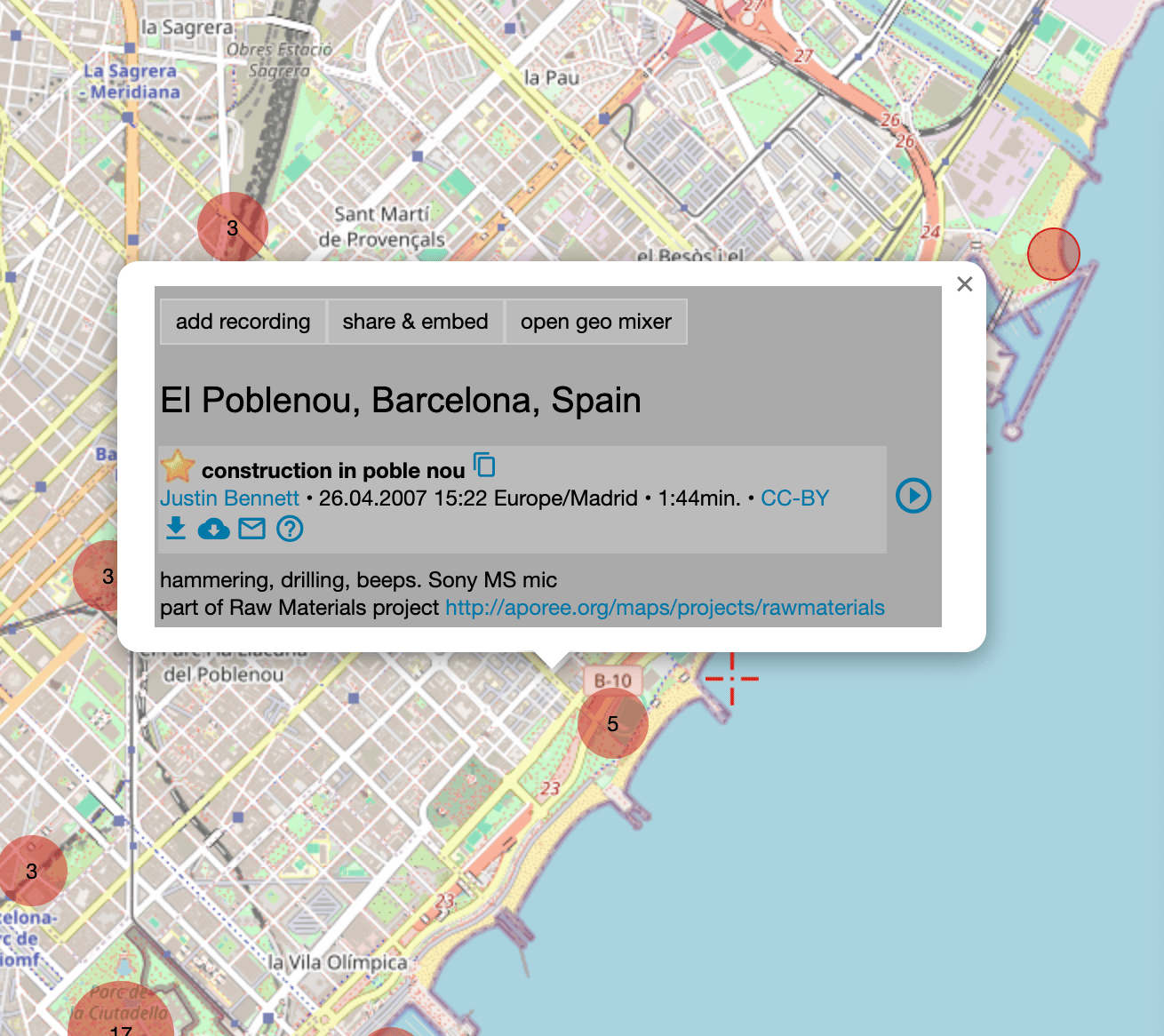
A universal property of cities worldwide: their noisiness, for the best or the worst. Sometimes, it’s the racket of cars, vehicles and people on a busy street that wakes you up like clockwork at 8am. Or, the cheerful greeting of birds in the park as you leave the office on a Friday afternoon. The sounds of a city can be deeply nostalgic - embedded in a time and space, a memory and moment. This is why we like radio aporee so much - a beautiful crowd-sourced project, where people have been adding recorded sounds from their cities (with a given place and time) since 2006, building over time a crowd-sourced soundmap of different environments and places around the world. A plane ticket sitting right in your earphones.
These are our top 3 - but we also wanted to highlight some other resources, views, and maps we liked - honourable mentions, if you will:
“Les villes rangées”, re-ordered cartographies of a few big cities, by artist Armelle Cafron
A Barcelona skincare store, designed by Mesura, built from quarry stones from the city’s most historical buildings and sites
Second Sea, an interactive calculator for financial damages due to the rising of the sea level, in different cities across the world
WikiBarrio, a mapping of socio-demographic data across Spain
We hope this gives you new perspectives on the cities we know, love and curse. See you next time, and ‘till then-
Concrete jungles of digital frenzy, numbers fraught and hazy-
From those, who, with their data, refuse to be lazy xx

Foraging for data, on the lookout for those quiet insights that grow in unexpected spaces…